
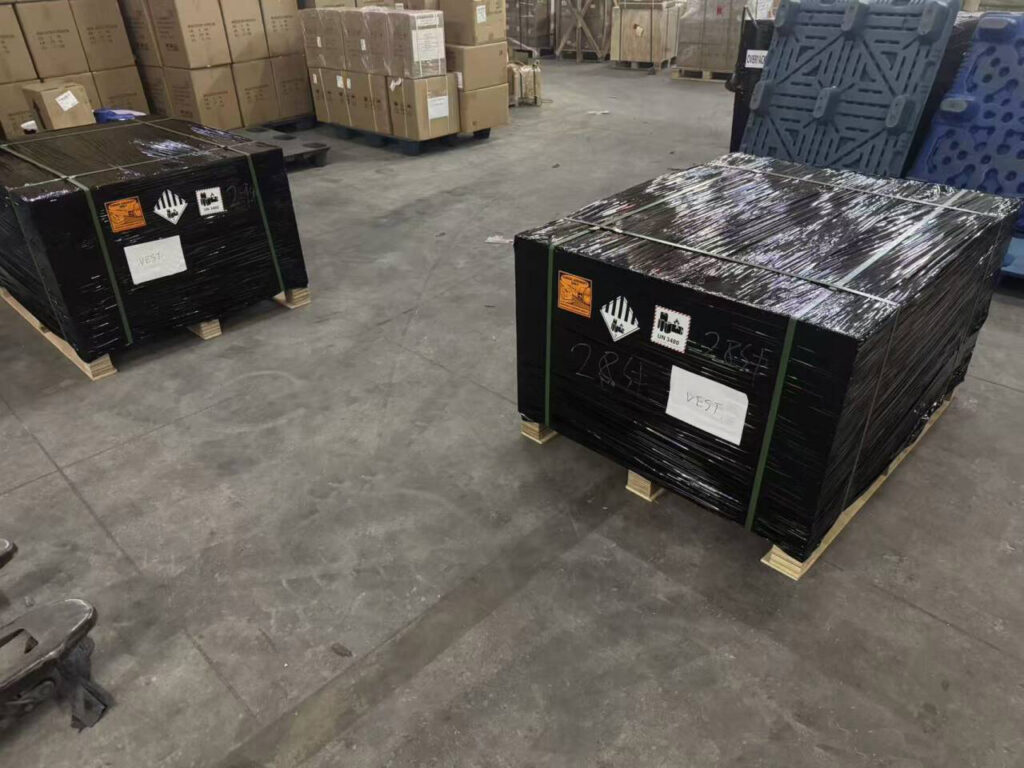

Due to their chemical properties, batteries are classified as dangerous goods. Violating shipping regulations may lead to delayed shipments, seized goods, heavy fines, or even safety risks. This guide will detail all core points of battery international air shipping in 2026: from battery classification and key regulations to packaging requirements, essential documents, and common pitfalls. Whether you are shipping lithium-ion batteries, lithium metal batteries, or other types of batteries, this article will help you complete the shipping safely, compliantly, and efficiently.
I. Top Priority: Correctly Classify Your Batteries
Correct classification is the first step to compliant shipping. Different types of batteries have exclusive UN numbers, shipping restrictions, and requirements. Misclassification is one of the main causes of shipping issues. Here is a clear explanation of common battery types and their classifications in 2026:
Common Battery Types & UN Numbers (2026 Updated)
- Lithium-ion Batteries: Rechargeable type. Classified as UN3480 (shipped alone) or UN3481 (shipped with/inside equipment).
- Lithium Metal Batteries: Disposable type. Classified as UN3090 (shipped alone) or UN3091 (shipped with/inside equipment).
- Other Types of Batteries: Nickel-metal hydride (Ni-MH) batteries, nickel-cadmium (Ni-Cd, UN2800) batteries, lead-acid (UN2794/UN2800) batteries, and alkaline batteries (usually not classified as dangerous goods, but still subject to basic shipping regulations).
Key Parameter: Watt-Hour (Wh) Calculation Method
The watt-hour (Wh) value (energy capacity) determines shipping restrictions, which is a mandatory requirement of the International Air Transport Association (IATA). The calculation method is as follows:
- Watt-Hour (Wh) = Voltage (V) × Capacity (Ah)
Example: A battery with 3.7V voltage and 2000mAh capacity = 3.7 × 2 = 7.4Wh. All batteries must clearly display voltage and capacity; if Wh is not labeled, it must be calculated and filled in the shipping documents.

II. 2026 IATA Regulations: Core Terms Must Be Followed
The 67th edition of the International Air Transport Association (IATA) Dangerous Goods Regulations (DGR) (effective January 2026) has updated regulations related to battery shipping. Ignoring these terms will lead to serious consequences. Here are the most critical regulations:
State of Charge (SoC) Limit
For lithium-ion batteries (UN3480/UN3481), the State of Charge (SoC) must be ≤ 30%, which is a mandatory requirement in 2026. Exceeding this limit will result in the goods being rejected or seized.
Flight Shipping Restrictions
- Lithium-ion batteries shipped alone (UN3480) can only be transported via cargo aircraft.
- Lithium metal batteries shipped alone (UN3090) can only be transported via cargo aircraft.
- Lithium-ion batteries with Wh > 100Wh or lithium metal batteries with lithium content > 2g require prior approval from the airline.
Country-Specific Restrictions
In addition to IATA regulations, it is necessary to confirm the relevant requirements of the destination country in advance, such as EU CE certification, US FCC certification, Japan PSE certification, etc.
III. Packaging Requirements: Protect Batteries and Ensure Compliance
Standardized packaging can prevent battery short circuits, leaks, or damage. Please follow the following IATA-compliant packaging guidelines:
General Packaging Rules
- Use sturdy, puncture-resistant corrugated cartons or export-grade wooden boxes that can withstand vibration and impact during transportation.
- Each battery must be packaged individually to avoid contact with other batteries or metal objects (insulation bags or tape can be used to wrap the positive and negative terminals).
- Fill the package with cushioning materials (such as foam, bubble wrap) to prevent battery movement.
- Ensure the package is waterproof and moisture-proof.
Labeling Requirements
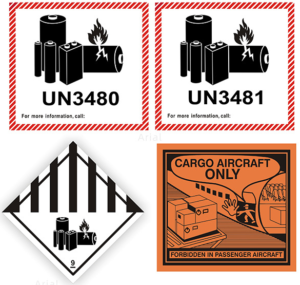
Missing or incorrect labels will cause shipping delays. Essential labels include:
- UN Dangerous Goods Label (diamond-shaped, batteries correspond to Class 9 dangerous goods).
- Lithium Battery Label (rectangular, marked with “LITHIUM BATTERY” and UN number).
- “Cargo Aircraft Only” Label (applicable to batteries prohibited from passenger aircraft).
- Directional Arrow Label (indicating the correct placement direction).
- 24-hour emergency contact number, battery quantity, and watt-hour value.
IV. Essential Documents for Battery International Air Shipping
Lack of relevant documents will cause the goods to be detained at customs or rejected by the airline. Here is a list of essential documents:
- MSDS (Material Safety Data Sheet): Detailedly explains battery composition, hazardous properties, and emergency handling procedures.
- UN38.3 Test Report: The “international passport” for lithium batteries, proving that the batteries have passed 8 safety tests.
- Dangerous Goods Declaration (DGD): Completed by the shipper.
- Air Waybill (AWB): Marked with “Lithium Battery”.
- Commercial Invoice: Clearly indicates “Battery-Powered Device” or “Lithium Battery”, and marks the accurate value and quantity of the goods.
V. Common Pitfalls to Avoid
Small mistakes may lead to serious problems. Please avoid the following common pitfalls:
Pitfall 1: Misclassification or Vague Declaration
Never label batteries as “electronics” or “accessories”. You must clearly indicate the battery type, capacity, and UN number (example: “18650 Lithium-Ion Battery (3.7V, 2000mAh, UN3480)”). Vague declarations will trigger customs inspections.
Pitfall 2: Ignoring the State of Charge (SoC) Limit
In 2026, IATA strictly enforces the regulation that the State of Charge of lithium-ion batteries must be ≤ 30%. Failure to discharge the batteries as required will result in the goods being rejected.
Pitfall 3: Cutting Corners on Packaging/Labels
Omitting insulation treatment, insufficient cushioning materials, or missing labels are all costly mistakes. The cost of standardized packaging is much lower than the loss caused by handling seized goods.
Conclusion
International air shipping of batteries is not difficult. As long as you correctly classify the batteries, comply with IATA regulations, standardize packaging, plan in advance, and prepare all relevant documents, you can achieve safe and efficient shipping.
If you have more needs for international battery logistics and shipping, you can browse my webpage https://batteryshipping.cc/lipo-battery-shipping. Feel free to contact me anytime.